
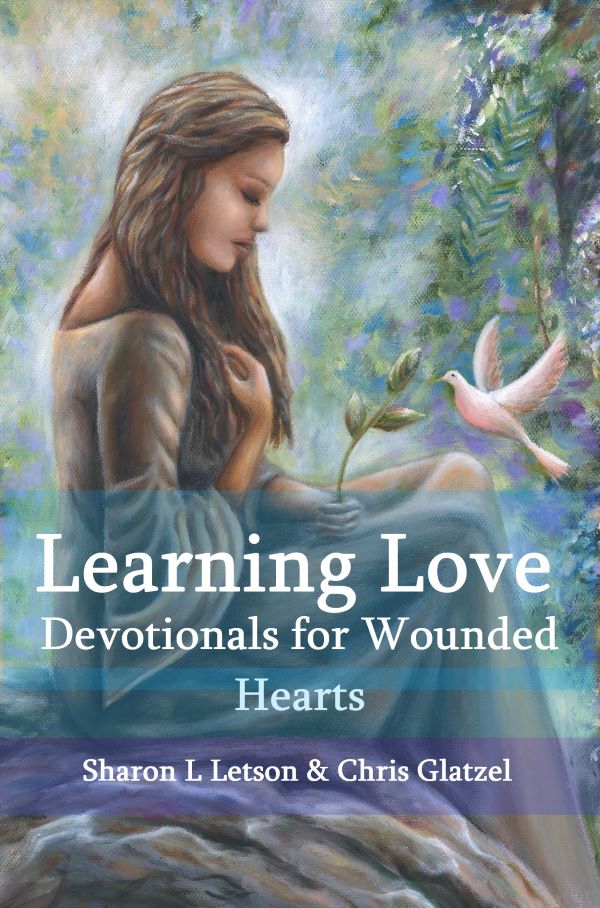
Learning Love is based on the idea that for those of us who were brought up in households without a solid foundation of love, it is very easy to get confused about what love is. If we were never shown love in a tangible way as children, we first must learn what love is and experience it before we can show it to ourselves and others.
Lack of love as children created wounds in our hearts that need to be addressed. These devotionals are meant to help each of us process through the hurt and move toward healing through God’s truth and love.
2nd edition is out now!
The title of this book is “Learning Love”, not “Learning to Love”, because before you can experience love you must first know what love is. What does it look like? What are its attributes?
It’s impossible to give away something that we don’t possess, therefore we first must learn what love is and experience it before we can show it to ourselves and others.
Without a solid foundation of love, it is very easy to get confused about what love is. Many of us were never shown love in tangible ways as children. My siblings and I often joke that we were raised by wolves. That is our way of dealing with the reality that we often had to take care of ourselves, without a lot of oversight and intentionality by our parents.
We know now that our parents did the best they knew how. There just were a lot of kids, a lot of fighting between our parents, a mother who didn’t know how to discipline, whose own emotional needs were not met, and a father who was gone most of the time, and angry when he was there.
I was 16 the first time I ever heard my father say anything that sounded like ‘I love you’. I believe the conversation centered around a relationship I had gotten into that my father was concerned about. (Those of you women with absent fathers will probably be able to relate to looking for love from other men.) My father started out his speech of concern with these words, “You know your mother and I love you”.
The statement amazed me. I actually didn’t know that my parents loved me, nor did those words feel loving. They felt critical rather than caring. And my father had never said anything remotely like that to me before.
There had been nothing in my life up until that point that would have given me any kind of impression that my father, in particular, loved me. No kisses good night, no bedtime stories, no “love you” as we left for school or even a concerned, “wear your sweater, it’s chilly”. But there had been plenty of other kinds of messages. Ones that said we were no good, in the way, even unwanted.
So, when I heard messages about God loving us like a father, I didn’t have anything to relate it to. And maybe you don’t either. Maybe that’s why you picked up this book. For people like us who were not brought up in a home grounded in a secure demonstration of love, we need to learn what love really means.
The Bible tells us that love is who God is. It is his very nature. 1 John 4:16 tells us:
God is love. Whoever lives in love lives in God, and God in him.” (NIV)
God is love and He is and always has been relational. He has always wanted to interact with humanity through a love relationship. So, to best understand God, and to walk in a deeper, fuller relationship with Him, we must first understand love.
A little further down in the same passage it says:
There is no fear in love. But perfect love drives out fear, because fear has to do with punishment. The one who fears is not made perfect in love.
I didn’t understand that my parents’ loved me. And I was afraid, not knowing what kind of mood our dad would be in, so afraid he would be angry and lash out in some way. Afraid of not being good enough to live up to his expectations and God’s. Fear of speaking up and expressing my needs. Fear of being laughed at for crying at a sad movie. Fear of failure, fear of what others thought of me, fear of being hurt by others, fear of abandonment, etc. The list could go on and on.
Sometimes the voice we hear in our heads is a harsh, yelling voice that causes us to shrink back and be afraid. We need to remember that is not the way God speaks to us. He is always gentle and kind even when He’s correcting us. He isn’t the one giving us a spirit of fear.
God is love and that perfect love casts out every bit of fear. When we get grounded in love, understand it, know what it means when God says He loves us like a father, there is something that grows within us. The fear is pushed away, and confidence and boldness replace it.
Which fear do you most identify with?
When do you remember first feeling that fear?
Is this a fear you still struggle with?
Let’s address that negative emotion of fear:
Father, I know that you didn’t intend for me to be afraid. I reject the lie that you are someone I need to fear and declare the truth that You are always trustworthy.
What does God’s love look like to you?


Leave a Reply